Ferocity and confidence carry over from the tiger face into this full-body version, stripes and all, usually caught mid-prowl. It got a pop-culture boost in 2020 when Netflix's 'Tiger King' made every tiger reference briefly about Joe Exotic.
What 🐅 means
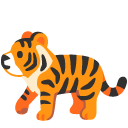
The whole, furry body of a tiger, with its signature black stripes on orange fur, standing on all fours, looking towards the side, also displaying its curled tail.
The 🐅 emoji signifies personal strength and greatness, and also the majestic beauty of the animal it represents. It also conveys threat and ferocity. In some platforms, the face of the tiger is turned straight ahead while the rest of its body points to the left.
How and when to use it
- If the subject matter involves tigers, or cats, or even wildlife in general, 🐅 fits just fine.
- 🐅 can be used to represent your own strength, or courage, or even fearlessness.
- Your comparison to the freedom and survivability of a wild animal can be conveyed through this 🐅 emoji.
- Pursuits of some kinds can be represented with 🐅, due to the stealthy prowling nature of tigers. ("Go and get 'em, tiger")
Other Names
- 🐅 Tiger Body
- 🐅 Wild Cat
- 🐅 Striped
- 🐅 Tiger Cub
- 🐅 Cub
- 🐅 Big Cat
- 🐅 Wild Animal
- 🐅 Wildlife
- 🐅 Ready to Hunt
The lowdown
- Category
- Animals & Nature › animal-mammal
- Codepoints
U+1F405- Emoji version
- Emoji 1.0
- Shortcodes
:tiger2:- Keywords
- animal, big, cat, predator, tiger, zoo
How it looks across platforms
Seeing a blank box instead of the emoji somewhere? Here's why that happens. Curious why the designs above don't match to begin with? Here's why that happens too.



Pairs well with
Tap any combo to copy the whole thing.
⚡ Quick round
Which joined the keyboard first — 🐅 Tiger or 🫒 Olive?