Tusks and a bristly hide separate the boar emoji from its pink, farm-raised cousin the pig-face. It stands for the wild, untamed version of the animal, and for calling someone tough, aggressive, or hard to back down.
What 🐗 means
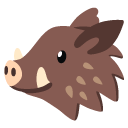
The typical face of a wild boar with its signature tusks sticking out of its long snout on its pig-like face, but in a brownish shade. It's also characterized by its pointed ears and scruffy hair on the top of its head.
This emoji suggests a sense of wild and uncivilized. Also, strength and danger. However, the 🐗 emoji is commonly used in a condescending manner and not representing any impressive qualities a boar might possess.
Various platforms vary in their depiction of this emoji. Some even show the full body of the boar.
How and when to use it
- Firstly, when the conversation literally involves boars, or even pigs, using 🐗 works fine.
- 🐗 can be used when talking about pork and pork products.
- Someone behaving uncivilized and undisciplined can be represented through 🐗.
- 🐗 also signifies a sense of wild dangerousness and can be used to denote that emotion or quality.
- A person's appearance can be derogatorily compared to a wild boar using 🐗.
Other Names
- 🐗 Wild Boar
- 🐗 Warthog
- 🐗 Wild Pig
- 🐗 Common Wild Pig
- 🐗 Wild Swine
- 🐗 Pumba
- 🐗 Swine
- 🐗 Sow
- 🐗 Oink
- 🐗 Hog
- 🐗 Shoat
The lowdown
- Category
- Animals & Nature › animal-mammal
- Codepoints
U+1F417- Emoji version
- Emoji 0.6
- Shortcodes
:boar:- Keywords
- animal, boar, pig
How it looks across platforms
Seeing a blank box instead of the emoji somewhere? Here's why that happens. Curious why the designs above don't match to begin with? Here's why that happens too.



⚡ Quick round
Which joined the keyboard first — 🐗 Boar or 🫢 Face with Open Eyes and Hand Over Mouth?